Showing posts with label texture. Show all posts

Wednesday, July 29, 2015

Watercolor Canvas

"A Burst of Blooms"  12 x 12 inches,  Watercolor on canvas, Available at DPWs
Taking a small break from oils right now, and re-visiting watercolors.  Decided to work on some special canvas designed just for watercolor painting made Fredrix archival stretched watercolor canvas

Started this painting, beginning with the background.  I put down a wash of yellow leaving the center open, and covered the washed area with plastic wrap.  I then set the whole canvas aside for about a half an hour to dry.  When I removed the plastic there was a wonderful texture of yellows and white.
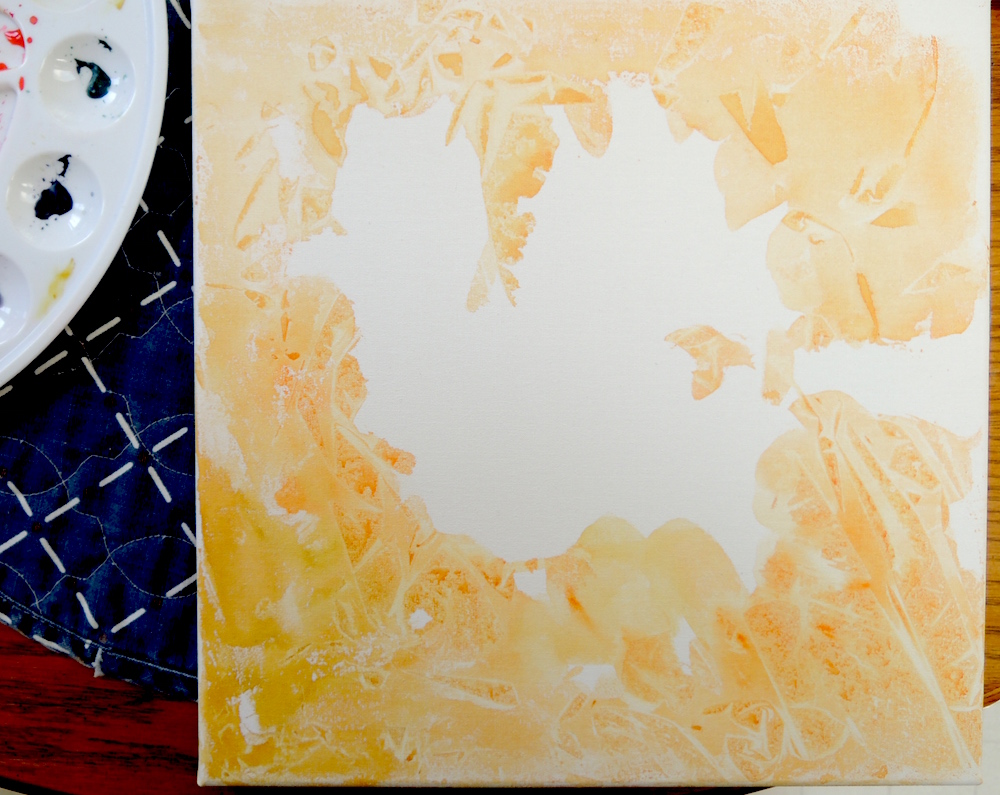
It is a little hard to see all the texture from the photo, but hope you get the idea.  From this point I just started painting my vase of flowers.  One note about working with watercolor on canvas, it is easy to put down paint, but even easier to lift paint.  So when painting be brave and put those colors down, because you can easily remove a mistake, but forget about layering your color, go for bold.
    When it is finished and dry, lightly spray the painting 2 or 3 times with an acrylic varnish, that is what seal the painting so it does not need to be framed under glass.
Be brave and give it a try.
Mary
SchirosArt


Monday, February 2, 2015

Snow day

Last night we got about a foot and half of snow.  What is not to love about Michigan :)
Lucky for me I had nowhere I had to be today.  So what do you do when you are snowed in....
paint!!!
    This where I stopped for today.
18 x 18 inches, Acrylic on canvas
Going to think about it for a while, before I decide if it is finished yet.  When I decide it will be added to my web site at Daily Paint Works.  But for right now it is time to just hang it and think about it.
    Thought I would share the steps, layers, that got me to this point.  
I started with base colors, flexible modeling paste, and really only the thought of sky.  I wanted some wild texture to the first layer.

The mid point I let the texture dictate the ground.  Nature is not perfect, and I wanted this to be part of the painting.  If you think about painting every blade of grass the way you think it should be, reality is lost.  Interesting thought that a little chaos and abstraction is more real than planned perfection.  Ok that was a little deep, hope I do not get a head ache now.
    Anyways, just thought I would share.  Off to texture some more canvas before the roads are cleared here.
Mary
Schiros-art.com


Thursday, September 26, 2013

Surprise Ending

Day 26 of 30 paintings in 30 days, and it started out  rough, but ended ok...
Acrylic, "A Pose",  10 x 8 inches on canvas panel
                                                                                         Available at DPWs
This painting started out life as a tree, a simple tree.  What started out as a simple painting tumbled out of control.  Got up early and had a small sketch I planned to quickly paint for today's painting.  It started out well but did that mistake that happens, went too far and lost the original idea.
where I started
Still interesting
A point to far

Should have stopped here, I wanted it abstract and colorful,  did I?  No...
Got to this point and just wasn't happy.  While it was still wet dumped some pinks and iridescent paints on it, scraped in some texture, and start over.  Love what I ended up with, so sometimes a failure and change of direction is a good thing!
Mary
Schiros_Art

Monday, May 13, 2013

From Pencil to Paint

20 x 16 inches oil on canvas


To follow up on my last post, thought I would share the first painting from my last sketching session.  I picked the drawing I liked the best, then drew a grid over it to help decide the lay out.
 From that I sectioned off the area I wanted to redraw on my canvas.  Then I did a quick acrylic painting to use as an under painting.  For the under painting I used Matisse back ground acrylics they are matte and have more tooth that regular acrylics.  When the under paint was totally dry (gave it 24 hours), I finished it in oil.  Used Weber water mixable oils starting with brush work then finished with a palette knife for a little more texture. 


 Mary

Friday, March 22, 2013

Preparing for Abstracts

"Secrets"  Mixed media 24 x 18  inches
  
"Rust and Steel" Mixed media


It often appears that an abstract art work is quick and spontaneous.  Sometimes abstracts do happen that way.  But often there is a lot of preparatory work going on behind the scene. 
For most of the abstracts I do in watercolor or acrylic I use some collage.  For collage I like to texture and design my papers.  This could involve textured artist tissue paper with gesso and paint, there times I use ink, and solvent on found papers, to get usual effects.
To apply my collage parts I use a mix of gloss and matte medium, fluid for thin papers, and gel for heavier ones.
The process of textured the papers to use take a few days and layering then into the work takes several days also, because it is best to layer thinly allowing each layer to dry before apply the next.  Any painting between layers and at the finish should completely day before finishing with varnish.
Yesterday I spent the whole day just making collage papers. Today I am sorting and figuring out which ones are best to use. Next will be laying them out on a gessoed panel and creating the basic design. That is the process I used in the paintings that I am sharing above.  
  
piles of ink textured paper getting sorted

close up of one paper

another example of paper
 Mary

Wednesday, May 9, 2012

Painting with Leftovers

Acrylic 10 by 8 inches, acrylic skin and paint knife


I Thought II             I thought I would share a neat way to use leftover acrylic paint.  Depending on what you use for a palette, often the dry paint film can be pulled off.  There are palettes of plastic that are made for just that, but plastic sheets used as drop clothes work well to.  I often cover the whole table I am working from with a plastic sheet then use the whole table as a palette.
Once there a     Once there are enough dry layers of acrylic you can catch an edge and peal it off.  Usually, the under layer is the most interesting.  You can then cut the piece of acrylic film, often called a skin, and glue it down to a painting surface with an acrylic gel medium, let it dry and paint over and around it to make a new and interesting piece of art.

A dry acrylic film ready for my next work

This is the underside, it is usually shinny, smooth and very interesting


Thursday, November 3, 2011

Try it all


Media makes a difference

A simple subject, such as a dog profile can change significantly, depending on the art media used to express the subject.  For me the media often sets the tone of the feeling being created in the picture.  How you express with different tools is some thing to keep in mind when working on a subject.
With pen and ink detail and design sing out.  Ink and a summi brush will be loose and free spirited.  When using acrylic color and texture dominate.  But then if the paint is watercolor the mood and color will create a totally different style.  This is why I love to try new media, just to see what the media has to teach me.  There is something to learn from every tool we try.


Monday, December 13, 2010

Preparing to be spontaneous


Preparing to be spontaneous......

As weird, as it sounds spontaneity can be planned.

I do this is with acrylic painting. I often paint with acrylics on watercolor paper.

Most of my watercolor paper is 140 lb weight cold press. By the time I am done working it is usually at least twice as thick. This is because it is coated with gesso prior to painting.

I coat the paper for 2 reasons. I love texture in my art work, and blank white paper or canvases scare the tar out of me.

Gesso comes in many forms, thin, thick, grey, white, black, colors and clear. If you only have white, it can be tinted with a color, or you can get colored gessoes from Holbein (China red is my favorite), or Daniel Smith (gold is really fun to use).

A basic layout or composition plan can also be started using a couple of colors of gesso.

Using gesso with color knocks out my two issues right at the start. I spread the gesso thickly with a spreader leaving scrapes and ridges randomly and generally use a mid tone color so that all I have to focus on are my lights and darks when painting.

When one side is coated and dry, I flip it over and do the back. By doing the back there are now two surfaces for me to work on, and it helps to thicken and flatten the paper.

I have started making my own spreader. Plastic snap on lids from food containers work great, and you are recycling at the same time. Clean the top off, then cut it in half, I also trim the corner edges a bit and they are ready to go.

These prepped sheets are set aside until I get in the mood to start painting, or as it really appears, dive into a spontaneous mess of splashing paint around.